If you have ever wondered, what is fungal acne and how do you treat it, you are not alone. Many people mistake this skin condition for regular acne and end up using products that make it worse instead of better. Fungal acne is a common but often misunderstood skin concern that shows up as small, itchy bumps, usually on the forehead, chest, or back. Unlike traditional acne, it is caused by an overgrowth of yeast rather than bacteria, which means it needs a different approach to treatment, and in some cases professional care such as facials and peels alongside antifungal products. At Divine Laser & Skin Care, understanding the root cause of a skin concern is the first step toward finding the right solution, and this guide breaks down everything you need to know about fungal acne in simple terms.
What Is Fungal Acne
Fungal acne, medically known as Malassezia folliculitis or pityrosporum folliculitis, is a skin condition caused by an overgrowth of yeast that naturally lives on the skin. This yeast, called Malassezia, is normally harmless, but when it multiplies too quickly inside hair follicles, it triggers small, inflamed bumps that can look a lot like acne. The confusion between fungal acne and regular acne is common because both conditions appear as breakouts, but the underlying cause and treatment are very different.
While traditional acne is linked to clogged pores, excess oil, and bacteria, fungal acne develops when yeast overwhelms the follicles. This is why products designed for bacterial acne, such as harsh benzoyl peroxide washes, often do little to help and can sometimes irritate the skin further.
Many people spend months trying different acne treatments without realizing that yeast, not bacteria, is behind their breakouts. Learning to recognize the signs of fungal acne early can save time, money, and unnecessary irritation.
Fungal Acne vs Traditional Acne
Telling the two apart can be tricky, especially since they often appear in similar areas. The table below highlights the key differences to help you identify which type of breakout you may be dealing with.
| Feature | Fungal Acne | Traditional Acne |
|---|---|---|
| Cause | Overgrowth of Malassezia yeast | Clogged pores, excess oil, bacteria |
| Appearance | Small, uniform bumps, often itchy | Varied sizes, blackheads, whiteheads, cysts |
| Common Areas | Forehead, chest, back, hairline | Face, jawline, back |
| Itchiness | Often itchy or uncomfortable | Rarely itchy |
| Response to Antibiotics | Does not improve or worsens | Often improves |
| Treatment Approach | Antifungal products | Antibacterial or exfoliating products |
Understanding these differences is important because using the wrong products can prolong the problem or cause further irritation.
Common Causes of Fungal Acne
Several factors can contribute to the yeast overgrowth responsible for fungal acne. Recognizing these triggers can help you manage flare ups more effectively.
- Excess sweating, especially in warm or humid weather
- Wearing tight or non breathable clothing for long periods
- Using heavy, oil based skincare or hair products
- A weakened immune system or recent antibiotic use
- Humid climates or environments that trap moisture against the skin
- Not showering soon after exercise or sweating heavily
Because Malassezia thrives in warm, moist environments, people who exercise frequently or live in humid climates may notice more frequent breakouts. Diet is sometimes discussed in relation to fungal acne as well, since some believe that sugar or yeast heavy foods can influence yeast levels on the skin, although the connection between diet and fungal acne is still not fully established by research. Stress and hormonal shifts can also play a role, as they may affect oil production and the skin’s natural balance, creating conditions where yeast can multiply more easily.
Symptoms of Fungal Acne
Fungal acne has a few distinct characteristics that set it apart from other skin concerns. Recognizing these symptoms early can help guide the right treatment plan.
Fungal Acne on Face
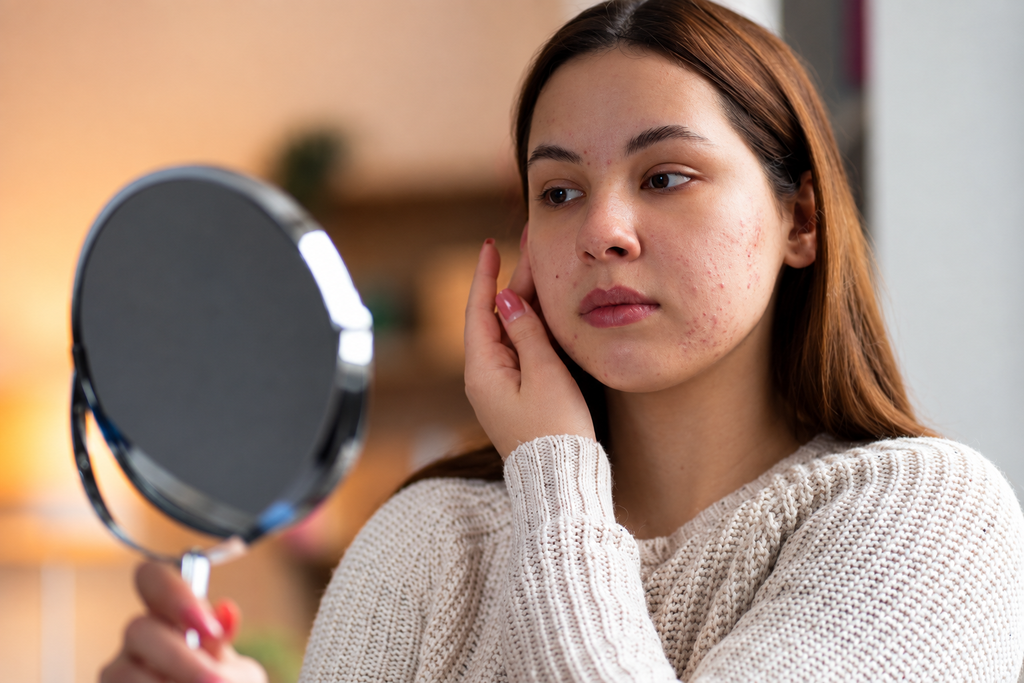
When fungal acne appears on the face, it typically shows up as small, uniform, whitehead like bumps that are often accompanied by mild itching. Unlike cystic acne, these bumps rarely become large or painful, but they can be persistent and slow to clear without the right care.
Forehead Fungal Acne
The forehead is one of the most common areas affected, partly because of oil production and partly due to contact with hats, headbands, or hair products. Forehead fungal acne often presents as clusters of small bumps along the hairline that may worsen with sweat or humidity. People with bangs or fringe hairstyles may notice more frequent flare ups in this area, since hair oils and product residue can sit against the skin throughout the day. Switching to lighter hair products and keeping the hairline clean can often reduce how often these bumps appear.
Fungal Acne Treatment Options
Effective fungal acne treatment focuses on reducing yeast overgrowth rather than targeting bacteria. A combination of topical care and lifestyle adjustments usually works best.
Antifungal Skincare
Look for cleansers, creams, or shampoos containing ingredients such as ketoconazole, zinc pyrithione, or selenium sulfide. These ingredients help control yeast levels on the skin and are widely used in over the counter dandruff shampoos, which can double as spot treatments when used correctly.
Simplifying Your Routine
Heavy, oil rich products can feed the yeast responsible for fungal acne. Switching to lightweight, non comedogenic products and avoiding fatty acids and certain oils in skincare can help calm breakouts over time.
Professional Guidance
Persistent or widespread fungal acne may benefit from professional skin assessment, especially if home remedies are not improving the condition. A licensed skincare provider can help identify whether the issue is truly fungal acne or another underlying skin concern, and recommend a suitable treatment plan. For those dealing with ongoing breakouts or skin texture concerns, exploring professional options such as facials and peels may support a healthier, more balanced skin barrier alongside targeted antifungal care.
Patience and Consistency
It is worth noting that fungal acne does not usually clear overnight. Most antifungal treatments take several weeks of consistent use before visible improvement appears, since the goal is to gradually rebalance the skin rather than dry out existing bumps. Stopping treatment too early, or switching products frequently, can make it harder to track what is actually working.
Prevention Tips for Fungal Acne
Preventing fungal acne largely comes down to managing the conditions that allow yeast to thrive. A few simple habits can make a noticeable difference.
- Shower promptly after sweating or exercising
- Wear breathable, moisture wicking fabrics
- Avoid sharing towels, hats, or headbands
- Choose lightweight, oil free skincare and hair products
- Keep skin clean and dry, especially in warmer months
- Change pillowcases and towels regularly
Consistency with these habits, combined with the right skincare products, can help keep breakouts under control over time.
When to See a Skincare Professional
If bumps persist despite home care, spread to new areas, or are accompanied by significant discomfort, it may be time to consult a skincare professional. Since fungal acne can resemble other conditions such as folliculitis or traditional acne, a proper assessment helps ensure the treatment plan actually addresses the root cause rather than masking symptoms temporarily.
A skincare consultation can also help rule out other possibilities, since conditions like heat rash or hormonal acne can sometimes look similar at first glance.
Final Thoughts
Fungal acne can be frustrating, especially when it is mistaken for regular breakouts and treated the wrong way. Recognizing the difference between fungal and traditional acne is the key to choosing the right products and habits for clearer skin. If you are still unsure what is causing your breakouts or want guidance tailored to your skin, the team at Divine Laser & Skin Care is here to help you understand your skin better and build a routine that actually works. Feel free to contact us to discuss your skin concerns and find a suitable path forward.
Frequently Asked Questions
What is fungal acne and how do you treat it?
Fungal acne is caused by an overgrowth of yeast in the hair follicles. It is typically treated with antifungal cleansers or creams containing ingredients like ketoconazole or zinc pyrithione, along with lightweight, oil free skincare products.
Is fungal acne contagious?
Malassezia yeast lives naturally on most people’s skin, so fungal acne itself is not considered contagious in the traditional sense, though sharing personal items like towels or razors can spread the yeast.
Can fungal acne go away on its own?
Mild cases may improve with better hygiene and lighter skincare products, but persistent fungal acne usually requires antifungal treatment to fully clear..
Why do I keep getting fungal acne on my forehead?
Forehead fungal acne is often linked to sweat, hats, hair products, or oily skincare that creates a favorable environment for yeast growth along the hairline.
Can I use regular acne treatments for fungal acne?
Standard acne treatments target bacteria, not yeast, so they often do not improve fungal acne and can sometimes irritate the skin further.